Every day, millions of videos, posts, and ads compete for attention.
Most of them fail.
Not because the content is bad.
Not because the creator lacks expertise.
Not because the product isn't valuable.
They fail because nobody stops scrolling long enough to see the value.
The first few seconds determine whether someone watches your content or moves on.
That's where hooks come in.
A hook is the opening statement, visual, or idea that captures attention and makes someone curious enough to continue consuming your content.
Whether you're creating TikTok videos, Instagram Reels, YouTube Shorts, Facebook ads, or UGC content, mastering hooks can dramatically improve your results.
This guide breaks down the most effective hook frameworks, proven templates, and psychological triggers used by high-performing creators.
What Makes a Great Hook?
A powerful hook typically combines three psychological elements:
1. Curiosity
Humans naturally want to close information gaps.
When you reveal part of a story but not all of it, people feel compelled to keep watching.
Example:
"I tried this strategy for 30 days and wasn't expecting what happened next."
The viewer wants to know the result.
2. Relevance
The audience must immediately recognize that the content relates to them.
Example:
"If you're struggling to grow on Instagram..."
People experiencing that problem instantly pay attention.
3. Emotion
Strong emotions increase engagement.
Effective emotions include:
- Frustration
- Excitement
- Surprise
- Fear
- Hope
- Relief
Example:
"I wasted two years doing this completely wrong."
The emotional pain creates interest.
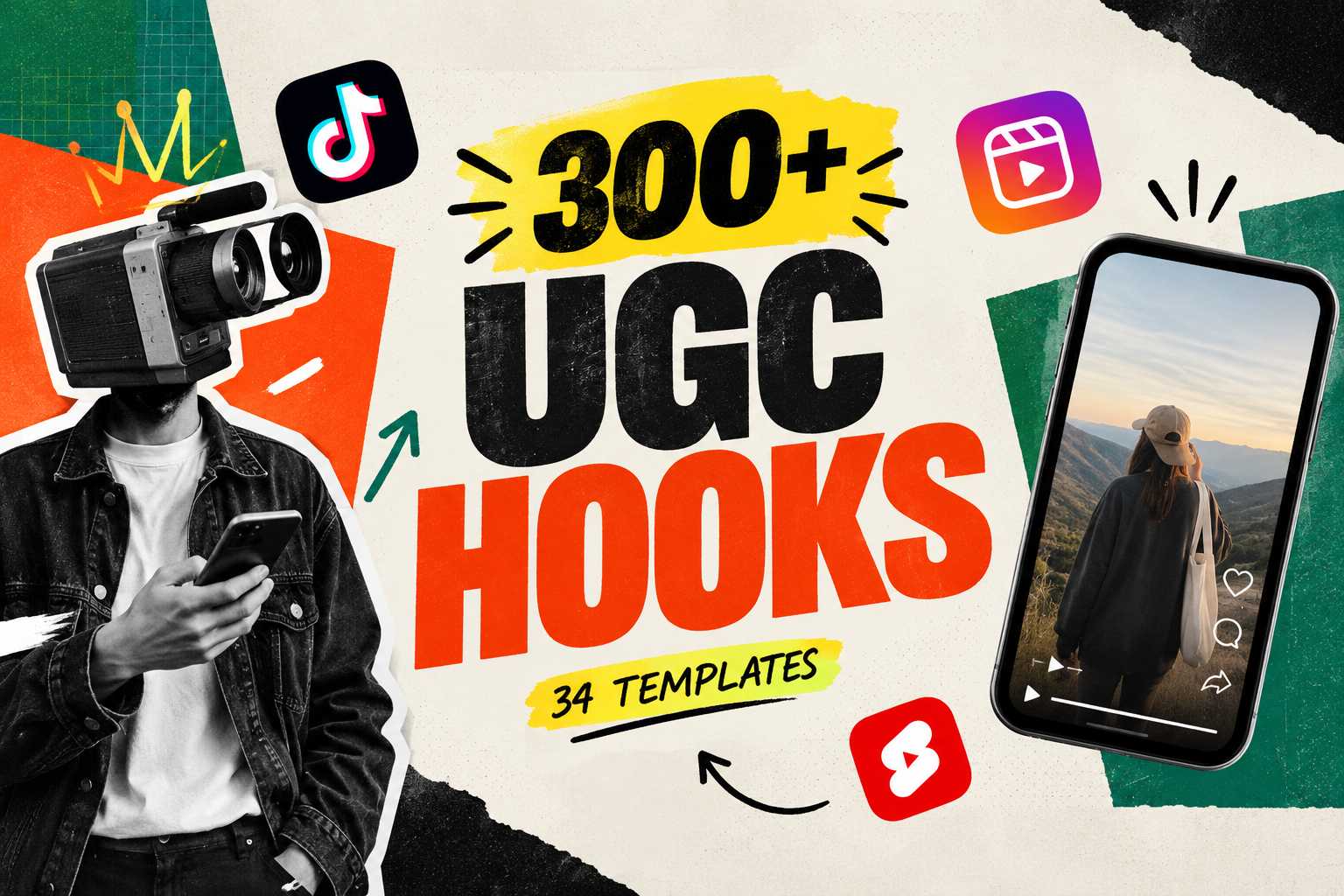
The 34 Fill-in-the-Blank Hook Templates
These frameworks can be adapted to almost any niche.
Curiosity Hooks
- Nobody talks about ______.
- The truth about ______.
- What happened after I tried ______ shocked me.
- I wish someone told me this about ______.
- Here's what nobody tells you about ______.
Example
Instead of:
"How to grow on TikTok"
Use:
"What nobody tells you about growing on TikTok."
Mistake Hooks
- The biggest mistake people make with ______.
- Stop doing this if you want ______.
- You're probably doing ______ wrong.
- Most people fail because of ______.
Example
"The biggest mistake people make when running Facebook ads."
Story Hooks
- Three months ago I was ______.
- I never thought this would happen.
- Let me tell you what happened when...
- This started as a simple experiment.
Example
"Three months ago I had less than 500 followers."
Transformation Hooks
- How I went from ______ to ______.
- Before vs after using ______.
- This one change transformed ______.
- Here's how I achieved ______.
Example
"How I went from 200 views to 2 million views."
Contrarian Hooks
- Everything you've heard about ______ is wrong.
- Unpopular opinion:
- Nobody agrees with me on this.
- Here's why most experts are wrong.
Example
"Everything you've heard about Instagram growth is wrong."
Question Hooks
- Have you ever wondered why ______?
- What if I told you ______?
- Are you making this mistake?
- Did you know that ______?
Questions create instant mental engagement.
10 High-Performing Hook Styles
The PDF highlights several recurring hook categories that consistently perform well.
Let's examine each one.
1. Story Opener Hooks
Humans are naturally drawn to stories.
When people hear the beginning of a story, they want to know how it ends.
Examples
- "I almost gave up before this happened."
- "Last year I made a huge mistake."
- "This started as a side project."
Why It Works
Stories trigger curiosity and emotional investment.
2. Relatable Struggle Hooks
People pay attention to content that reflects their own problems.
Examples
- "If you're struggling with motivation..."
- "Does anyone else deal with this?"
- "I used to have this exact problem."
Why It Works
Viewers immediately identify with the challenge.
3. Bold Claim Hooks
Bold claims grab attention because they challenge expectations.
Examples
- "This doubled my results."
- "This strategy changed everything."
- "I found a faster way."
Why It Works
People want proof.
The claim creates curiosity.
4. Curiosity Gap Hooks
These hooks intentionally leave information incomplete.
Examples
- "I wasn't expecting this outcome."
- "Something strange happened."
- "The answer surprised me."
Why It Works
The brain seeks closure.
5. Transformation Tease Hooks
Transformation is one of the strongest marketing triggers.
Examples
- "How I transformed my business."
- "Before and after."
- "This changed everything."
Why It Works
People desire improvement.
The 300 UGC Hook Frameworks
The PDF organizes hundreds of hooks into recognizable categories.
Here are some of the most valuable.
The Curious Creator
These hooks invite exploration and discovery.
Examples
- "I've been testing something interesting."
- "I discovered a simpler way."
- "I found something nobody talks about."
Best for:
- Educational content
- Product demonstrations
- Tutorials
The Gatekeeper
These hooks position the creator as someone sharing insider knowledge.
Examples
- "Most people don't know this."
- "Here's the secret."
- "Industry experts won't tell you this."
Best for:
- Coaching
- Consulting
- Information products
The Impossible Claim
These hooks challenge belief.
Examples
- "I achieved this in just 30 days."
- "This sounds fake, but..."
- "I didn't think this was possible."
Best for:
- Case studies
- Testimonials
- Success stories
The Regret Reveal
People want to avoid mistakes.
Examples
- "I wish I knew this sooner."
- "This cost me thousands."
- "Don't make the same mistake."
Best for:
- Educational content
- Product reviews
- Lessons learned
The Comparison Hook
Comparison naturally attracts attention.
Examples
- "Old way vs new way."
- "Cheap vs expensive."
- "Before vs after."
Best for:
- Product demonstrations
- Reviews
- Tutorials
The Unintentional Find
Discovery-driven content performs extremely well.
Examples
- "I accidentally found this."
- "I wasn't looking for this."
- "This happened by mistake."
Best for:
- UGC videos
- Product discoveries
- Social media content
The Ragebait Flex
These hooks intentionally challenge opinions.
Examples
- "Everyone disagrees with me on this."
- "This opinion might upset people."
- "I'm tired of hearing this."
Best for:
- Discussion content
- Engagement posts
- Personal branding
The Authority Endorsement
Authority creates trust.
Examples
- "Experts recommend this."
- "Top performers do this."
- "Research shows..."
Best for:
- Health products
- Business content
- Educational content
The Trend Hijack
These hooks leverage existing momentum.
Examples
- "Everyone is talking about this."
- "The latest trend explained."
- "Here's my take on this trend."
Best for:
- TikTok
- Instagram Reels
- YouTube Shorts
How to Turn Hooks Into Conversions
Many creators focus only on views.
The real goal is conversions.
A good hook should attract the right audience.
Not just any audience.
Formula
Hook → Interest → Trust → Action
Example:
Hook
"I wish I knew this before running Facebook ads."
Value
Explain the mistake.
Proof
Show results.
CTA
Offer the solution.
Hook Writing Checklist
Before publishing content, ask:
Is it clear?
The audience should understand it immediately.
Is it specific?
Specific claims outperform vague statements.
Is it relevant?
The hook should target a real audience problem.
Is it curiosity-driven?
There should be a reason to keep watching.
Does it match the content?
Never use clickbait.
Deliver on your promise.
Common Hook Mistakes
Being Too Generic
Bad:
"Here are some tips."
Better:
"Three tips that doubled my engagement."
Taking Too Long
Get to the point immediately.
Lack of Emotion
Facts inform.
Emotions engage.
No Curiosity
If viewers already know everything, they leave.
Examples by Industry
E-commerce
- "This product solved a problem I didn't know I had."
- "I didn't expect this result."
Fitness
- "I tried this workout for 30 days."
- "The biggest mistake beginners make."
Business
- "I wasted thousands learning this lesson."
- "Nobody talks about this growth strategy."
Marketing
- "This campaign changed everything."
- "I tested three strategies."
Frequently Asked Questions
What is a hook in content marketing?
A hook is the opening statement that captures attention and encourages viewers to continue consuming content.
How long should a hook be?
Most high-performing hooks are between 5 and 15 words.
The goal is immediate clarity.
What type of hook performs best?
Story hooks, transformation hooks, curiosity hooks, and relatable struggle hooks consistently perform well across platforms.
Can hooks improve sales?
Yes.
Strong hooks increase attention, engagement, trust, and ultimately conversions.
Should I use the same hooks repeatedly?
You can reuse frameworks but continuously test new variations.
The structure remains consistent while the wording changes.
Final Thoughts
Great content doesn't start with editing.
It doesn't start with production quality.
It starts with attention.
The creators who consistently generate views, engagement, and sales understand a simple truth:
If nobody watches the first three seconds, nothing else matters.
Use these proven hook templates, adapt them to your niche, and test relentlessly.
The best-performing content isn't created by luck.
It's created through proven psychological frameworks that make people stop scrolling and start paying attention.
Master the hook, and everything else becomes easier.