Video marketing has changed a lot in the last few years. Creating a video used to mean planning a script, recording footage, editing it, adding captions, finding music, and then publishing it. For a small team or a solo creator, that could take hours for just one video.
AI is changing that process.
In 2026, AI is being used across many parts of video marketing, from finding ideas and writing scripts to creating videos, editing content, and planning social media posts. According to Wyzowl’s 2026 video marketing research, 63% of video marketers have used AI tools to help create or edit marketing videos. That is up from 51% the year before.
But the biggest change is not simply that AI can make videos. It is changing how marketers think about creating content in the first place.
Video content is becoming easier to create
One of the biggest problems with video marketing has always been the time required to produce content.
A business may know that it needs to post more videos, but creating them consistently is another problem. You need ideas, scripts, footage, editing, captions, thumbnails, and a publishing plan.
AI can now help with many of these steps.
Instead of starting with a blank page, marketers can use AI to generate ideas, create scripts, find different hooks, edit clips, add captions, and turn one idea into several pieces of content.
This makes video creation much more accessible to small businesses, creators, founders, and marketing teams.
Video is also not going away. Wyzowl reports that 91% of businesses use video as a marketing tool, while 92% of marketers plan to spend the same amount or more on video marketing in 2026.
AI is helping marketers find better video ideas
Making a video is only part of the challenge.
The bigger question is often, "What should I make a video about?"
This is where AI can be especially useful.
Instead of guessing what might work, marketers can study videos that are already getting attention and look for patterns. They can examine the opening hook, topic, structure, length, visuals, captions, and overall format.
This does not mean every successful video should simply be copied.
The idea is to understand what people are responding to and then create something original around your own product, audience, and style.
This is becoming an important part of modern video marketing because platforms such as Instagram, TikTok, and YouTube Shorts are filled with new content every day. Getting someone's attention in the first few seconds matters more than ever.
AI is making short form video production faster
Short videos have become a major part of online marketing.
A company may want to publish several Reels, TikToks, or Shorts every week. The problem is that producing every video manually can quickly become expensive and time consuming.
AI can reduce the amount of manual work involved.
A marketer can start with a product idea, website, existing video, or simple concept. AI can then help turn that information into a script, hook, visual concept, or finished video.
This also makes it easier to test different ideas.
Instead of spending an entire day producing one video, marketers can create several variations and learn which topics, hooks, and formats get the strongest response.
Wistia's 2026 State of Video report also found that companies are producing more video while many teams are keeping their budgets flat. The report looked at more than 13 million videos and surveyed more than 900 professionals.
That puts more pressure on teams to produce more content without simply increasing production costs.
AI is changing the role of the video editor
AI does not mean that human creativity is no longer important.
In many cases, the role of the marketer or editor is simply changing.
Instead of spending most of the time doing repetitive editing work, people can spend more time deciding what the video should say, who it is for, and how it should feel.
AI can take care of many repetitive tasks while humans make the important creative decisions.
This is one reason AI works best as part of a workflow rather than as a replacement for creativity.
The goal is not to make every video look like it was made by a machine. The goal is to make the process faster while keeping the content useful, interesting, and relevant to real people.
Personalization is becoming easier
Another major change is personalization.
Different audiences respond to different messages. A SaaS company may want one video for founders, another for marketers, and another for developers.
Creating separate content for each audience used to require a lot of extra work.
AI makes it easier to create different versions of an idea. Marketers can change the hook, message, example, or format while keeping the core product the same.
This can help businesses test what connects with different audiences without starting from zero every time.
AI can help turn one idea into many pieces of content
Another useful change is content repurposing.
Imagine you create one product demo. That same demo could potentially become a short Reel, a TikTok, a YouTube Short, a LinkedIn video, a carousel, or several different scripts.
AI can help break the original idea into these different formats.
This is important because good content does not always need to be created from scratch.
The real opportunity is to get more value from the content you already have.
This is where tools like Youleey fit in
This is also the problem we are working on at Youleey.
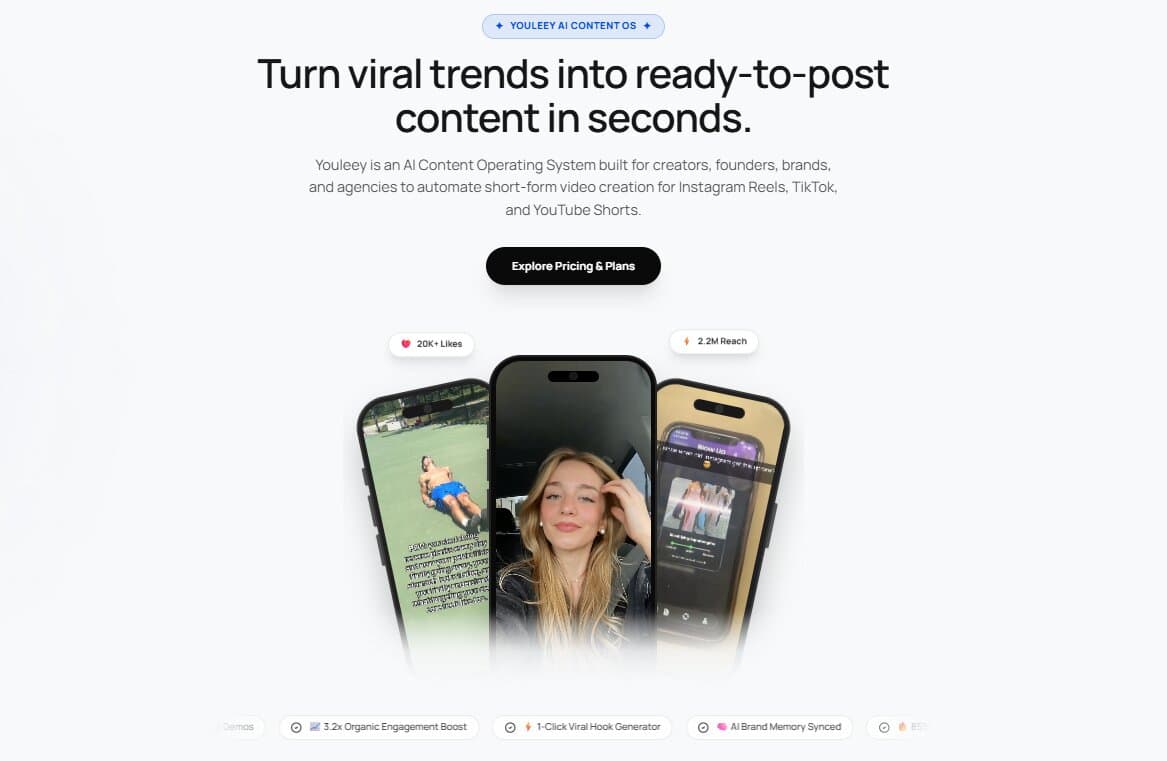
Youleey is an AI content platform built for creators, SaaS founders, apps, and marketing teams that want to create short form content faster.
Instead of starting with a blank document and trying to figure out what might work, Youleey lets you add your website or brand and use AI to help understand the product and audience.
You can then choose from different content formats, including Hook and Demo videos, videos with text, AI presenter videos, and carousels. Youleey can also generate hooks and scripts based on your brand and help turn ideas into ready to post content.
The idea is simple.
You should spend more time thinking about your product and your audience, and less time doing repetitive video production work.
Youleey also includes tools for analyzing videos, remixing existing video formats, maintaining brand information, creating content, and scheduling content for social platforms.
AI will not replace good marketing
There is one thing worth remembering.
AI can make the production process faster, but it cannot automatically make every piece of content good.
A video still needs a clear idea.
It needs to understand the audience.
It needs a reason for someone to keep watching.
And most importantly, it needs to offer something useful or interesting.
The best marketers in 2026 are not simply asking AI to make videos for them. They are using AI to speed up the parts of the process that take too much time while keeping the creative direction in human hands.
What video marketing looks like in 2026
The biggest change is not that AI can generate a video with a prompt.
The bigger change is that the entire video workflow is becoming faster.
Research can be faster.
Ideas can be generated faster.
Scripts can be written faster.
Videos can be created faster.
Different versions can be tested faster.
And content can be published across multiple platforms with less manual work.
As more businesses use video, the ability to consistently create useful content will become increasingly important.
AI gives marketers another way to do that.
Tools like Youleey are part of this shift by bringing research, hooks, scripts, video creation, and content publishing into a more connected workflow.
The future of video marketing is probably not about choosing between humans and AI.
It is about using AI to remove the repetitive work so humans can spend more time creating ideas that people actually want to watch.